Future Continuous: Uso, Regras e Exemplos
Resposta rápida:
O Future Continuous indica ações que estarão em andamento em um momento futuro. Estrutura: will be + verbo-ing.
By Edson Santos • Atualizado: Novembro 2025
O que é o Future Continuous?
O Future Continuous (ou Future Progressive) é o tempo verbal usado para falar sobre ações que estarão acontecendo em um momento específico do futuro. Ele mostra que a ação vai estar em andamento naquele ponto do tempo, e não apenas que ela vai acontecer.
Em português, normalmente usamos construções como “estarei fazendo”, “estarão estudando”, “vou estar viajando”. Em inglês, fazemos isso com will be + verbo com -ing.
Como formar o Future Continuous
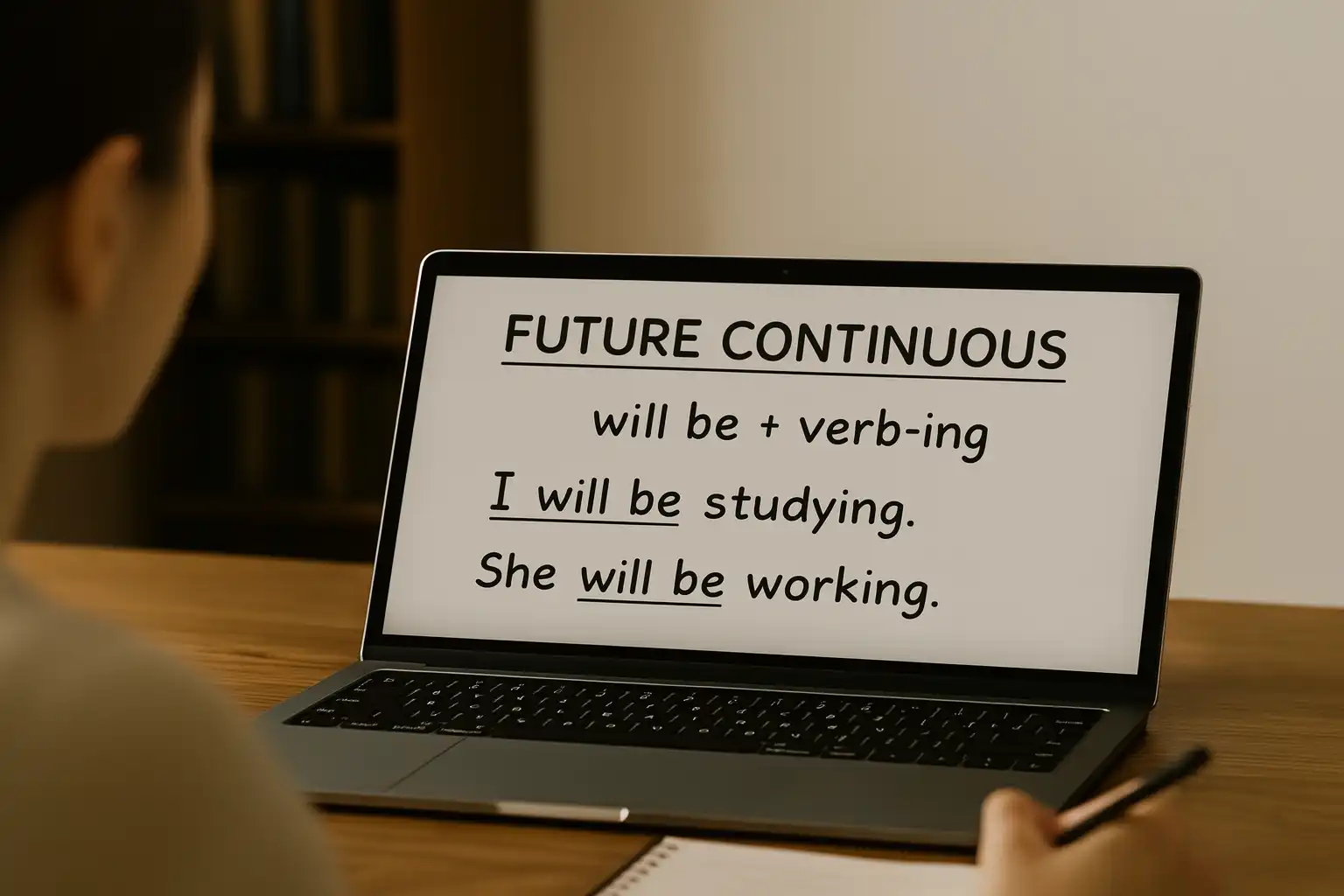
Sujeito + will be + verbo principal + -ing
- I will be studying – Eu estarei estudando.
- She will be working – Ela estará trabalhando.
- They will be traveling – Eles estarão viajando.
Forma afirmativa, negativa e interrogativa
Afirmativa
Subject + will be + verb-ing
Ex: We will be playing soccer tomorrow afternoon.
Negativa
Subject + will not (won’t) be + verb-ing
Ex: She won’t be studying tonight.
Interrogativa
Will + subject + be + verb-ing?
Ex: Will they be traveling next week?
Usos principais do Future Continuous
1. Ação em andamento em um momento específico do futuro
Usamos o Future Continuous para falar sobre algo que vai estar acontecendo em determinada hora ou momento no futuro.
Ex: At 8 p.m. tomorrow, I will be studying. (Às 8 da noite amanhã, eu estarei estudando.)
2. Planos e rotinas já organizados no futuro
Esse tempo também é usado para falar de programações e compromissos futuros, de forma mais educada e suave do que o Simple Future.
Ex: We will be staying at a hotel near the beach. (Nós vamos estar hospedados em um hotel perto da praia.)
3. Fazer perguntas educadas sobre planos de alguém
O Future Continuous é muito comum para perguntas educadas, porque soa menos invasivo do que “Will you do…?”.
Ex: Will you be joining us for dinner? (Você vai se juntar a nós para o jantar?)
4. Duas ações acontecendo ao mesmo tempo no futuro
Também podemos usar o Future Continuous para falar de ações simultâneas no futuro.
Ex: While I will be studying, my brother will be playing video games. (Enquanto eu estiver estudando, meu irmão estará jogando videogame.)
Perguntas e negativas no Future Continuous
🟢 Perguntas
Will + sujeito + be + verbo + -ing?
Ex: Will you be working tomorrow morning? (Você vai estar trabalhando amanhã de manhã?)
Ex: Will they be traveling in July? (Eles vão estar viajando em julho?)
🔴 Negativas
Sujeito + will not (won’t) be + verbo + -ing
Ex: I won’t be studying tonight. (Eu não estarei estudando hoje à noite.)
Ex: They won’t be attending the meeting. (Eles não estarão participando da reunião.)
Apostila Digital — Nível A1
Inglês Básico 2.0 — 25 unidades, 500 frases, certificado
Erros comuns com Future Continuous
- ❌ She will studying tomorrow. ✅ She will be studying tomorrow.
- ❌ They will be study at 10. ✅ They will be studying at 10.
- ❌ Will be you working? ✅ Will you be working?
- ❌ I won’t studying tonight. ✅ I won’t be studying tonight.
Os erros mais comuns acontecem quando o aluno esquece o “be” depois de will ou quando não coloca o “-ing” no verbo principal.
Resumo rápido
- Use will be + verbo com -ing para falar de ações em andamento no futuro.
- Serve para momentos específicos do futuro (at 8 p.m. tomorrow, next week, in July).
- É muito usado para planos organizados e perguntas educadas.
- Lembre-se sempre da estrutura completa: will + be + verb-ing.
💪 Exercícios: Afirmativo, Negativo e Interrogativo
Exercício 1: Forma Afirmativa
Complete a frase usando a forma afirmativa do Future Continuous:
"We _______________ (play) soccer tomorrow afternoon."
Exercício 2: Forma Negativa
Complete a frase usando a forma negativa do Future Continuous:
"She _______________ (study) tonight."
Exercício 3: Forma Interrogativa
Complete a frase usando a forma interrogativa do Future Continuous:
"_______________ they _______________ (travel) next week?"